High-Performance Kehua Steel Anti-Static Raised Floor Solutions
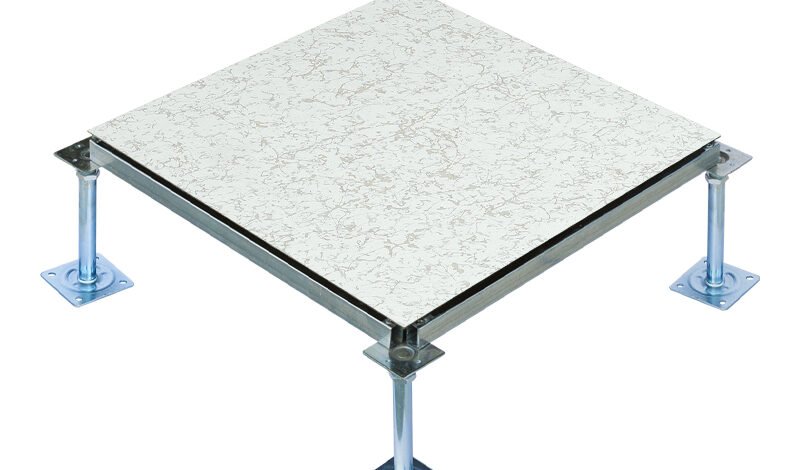
Steel anti-static raised floor panels are constructed with high-quality cold-rolled hardened steel plates for the top surface and ST14 stretched steel plates for the base. After stamping and welding, the panels undergo phosphating and electrostatic powder coating. The interior is filled with high-strength expanded cement, and the surface is covered with anti-static materials such as HPL, PVC, or tiles according to specific requirements.
The product features waterproofing, fire resistance, stain resistance, chemical corrosion resistance, easy installation, excellent installation results, and a long service life.
Transform Your Technical Infrastructure with the Kehua Steel Anti-Static Raised Floor
Modern mission-critical environments require floor systems engineered for safety, structural strength, and cable accessibility. The Kehua steel anti-static raised floor addresses these demands by combining heavy-gauge steel construction, cementitious cores, and electro-static discharge (ESD) conductive top coatings. Designed specifically for facilities operating high-density servers and sensitive telecommunication infrastructure, this raised access system safeguards sensitive circuitry against sudden electrical arcs and static build-up.
Built for Strength and Extreme Load Endurance
Underneath the protective surface lies a robust outer shell formed from top-grade cold-rolled steel sheets. The top sheet and bottom pan are spot-welded together to form an exceptionally rigid container filled with high-density, lightweight cellular cement. This composition prevents hollow spots and structural sagging, allowing the flooring grid to handle immense concentrated loads, rolling equipment carts, and static server racks without flexing.
Whether moving heavy uninterruptible power supply (UPS) units during maintenance or reconfiguring modular server cabinets, the system maintains structural stability. High concentrated load performance guarantees that your floor stays level over decades of heavy operational traffic.
Comprehensive Electrostatic Discharge Safeguards
Electrostatic discharge represents an invisible threat to microchips, network switches, and processing units. A minor static charge can corrupt data or destroy delicate internal silicon components. The surface layer of the Kehua steel anti-static raised floor is bonded with premium High-Pressure Laminate (HPL) or conductive PVC tiles.
These materials feature a controlled surface resistivity (typically to ), directing static charges away from human operators and hardware down through grounding pedestals and stringers. By grounding charges safely into the building’s earth system, the flooring minimizes equipment downtime and hardware failure caused by ESD friction.
Optimized Underfloor Airflow and Cable Management
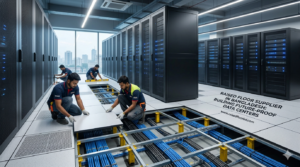
As IT hardware becomes denser, cooling and cable arrangement become critical operational challenges. Installing a raised access floor creates a dedicated underfloor plenum space that organizes power feeds, fiber optic lines, and cooling airflow.
-
Airflow Efficiency: Works alongside perforated steel panels and airflow grommets to create cold aisle containment, delivering conditioned air directly to server intake fans.
-
Tidy Cable Routing: Keeps high-voltage power cables isolated from data networking cables, eliminating interference and reducing tripping hazards.
-
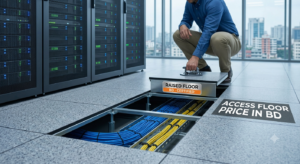
Easy Access: Standardized modular panels allow technicians to lift panels with a vacuum lifter, instantly reaching underground utility runs without interrupting nearby workflows.
Fire Resistance, Corrosion Protection, and Long-Term Value
Safety standards in data centers demand strict fire safety compliance. Constructed entirely from non-combustible steel and cement, the panels deliver Class A fire resistance, preventing flame spread during electrical emergencies. Furthermore, the steel structure receives an epoxy powder coating or galvanized protective treatment, making it highly resistant to rust, moisture, and chemical exposure.
Investing in a high-grade raised floor system reduces lifetime maintenance costs. Instead of cutting into concrete slabs or routing cables along visible wall conduits, facility managers can reconfigure room layouts simply by opening panel grids and re-routing underfloor connections.
Kehua Steel Anti-Static Raised Floor Specifications
Why Choose Kehua Steel Anti-Static Raised Floor
Choosing the right elevated flooring system impacts your facility’s safety, longevity, and overall operational budget. Here is why industry professionals choose this raised access system:
-
Uncompromised Equipment Protection: Protects multi-million dollar computing hardware from static discharge, power surges, and thermal build-up.
-
Precision Engineering: Manufactured with tight dimensional tolerances () to ensure seamless grid fitting and zero panel wobbling.
-
Flexible Architecture: Adaptable pedestal height ranges allow custom underfloor depths suited for either light cable routing or high-volume HVAC distribution.
-
Superior Fire & Moisture Safety: Fully non-combustible steel-cement composition resists environmental degradation and fire hazards.
-
Cost-Effective Scalability: Simplifies room expansions, server upgrades, and wiring rewrites without costly structural alterations.
Pros and Cons: Kehua Steel Anti-Static Raised Floor
Frequently Asked Questions (FAQs)
1. What makes the Kehua steel anti-static raised floor ideal for data centers?
It offers a blend of static dissipation, Class A fire rating, and massive concentrated load resistance. Its open underfloor design also enables efficient cold-aisle air management and tidy cable containment.
2. How does the anti-static surface layer work?
The surface tile (HPL or PVC) is manufactured with conductive materials that maintain a surface resistivity of to . Static electricity generated by personnel movement or equipment is immediately funneled down through grounding clips and steel pedestals to the building earth ground.
3. Can the height of the raised floor pedestals be adjusted?
Yes. The steel pedestal assembly features adjustable threaded rods, allowing installer crews to adjust sub-floor clearances anywhere from up to to accommodate varying amounts of cables and air ducts.
4. How do technicians access cables beneath the floor?
Panels are modular and unattached to the subfloor. Technicians use a suction cup panel lifter to remove any individual tile instantly without damaging adjacent panels or disturbing nearby server racks.
5. What maintenance is required for anti-static HPL surfaces?
Clean the floor using neutral, non-abrasive cleaning agents and dry mops. Avoid using wax or silicon-based polishes, as these leave insulating coats that block the panel’s static conductive properties.
|
|
|
|