Calcium Sulphate vs. Cementitious Core Raised Floors: Which Is Best for Your Project?
Designing a modern facility requires making critical structural decisions that balance heavy load capacities, acoustics, long-term durability, and budget efficiency. At the heart of any modern data center, server room, cleanroom, or corporate office building is the raised access floor system. It acts as an invisible highway, organizing intricate networks of power cables, data lines, HVAC airflow systems, and piping beneath your feet. Calcium Sulphate vs. Cementitious Core Raised Floors
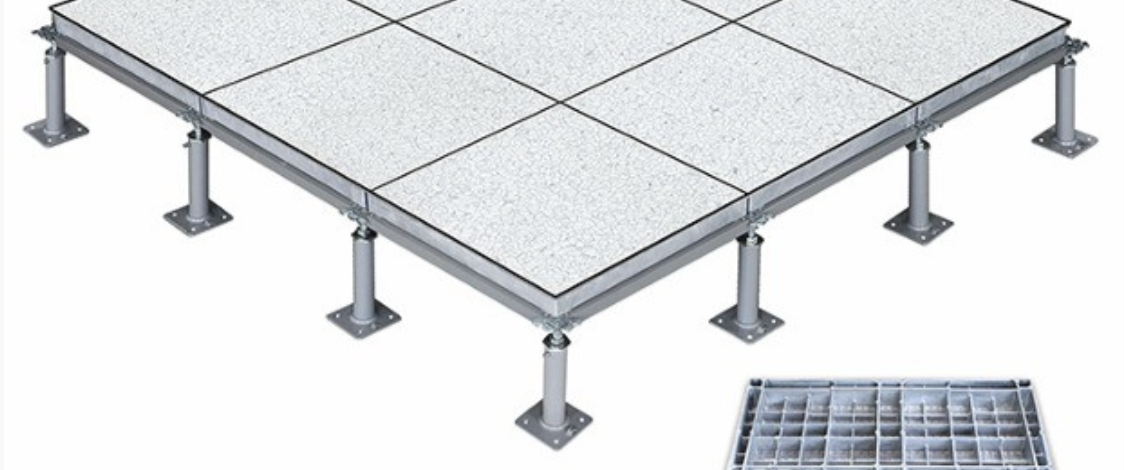
When specifying raised panel systems, two industry heavyweights dominate the landscape: Calcium Sulphate Core Raised Floors and Cementitious Core (Cement-Filled Steel) Raised Floors.
Both offer exceptional strength, fire resistance, and structural stability, but their material compositions create distinct advantages depending on your building environment. This guide breaks down their core differences, performance metrics, and real-world applications to help you specify the ultimate flooring foundation for your project.
Understanding the Foundations
Before comparing performance characteristics, it is essential to look at how each panel core is engineered.
       +-------------------------------------------------------------+
       |               RAISE ACCESS FLOORING CORES                   |
       +------------------------------+------------------------------+
                                      |
              +-----------------------+-----------------------+
              |                                               |
              v                                               v
  [ CALCIUM SULPHATE CORE ]                       [ CEMENTITIOUS CORE ]
  - High-density recycled gypsum                  - Welded steel outer shell
  - Organic cellulose fibers                      - Light-density cementitious infill
  - Monolithic structural mass                    - Composite steel-concrete strength
What is Calcium Sulphate Core Raised Flooring? Calcium Sulphate vs. Cementitious Core Raised Floors
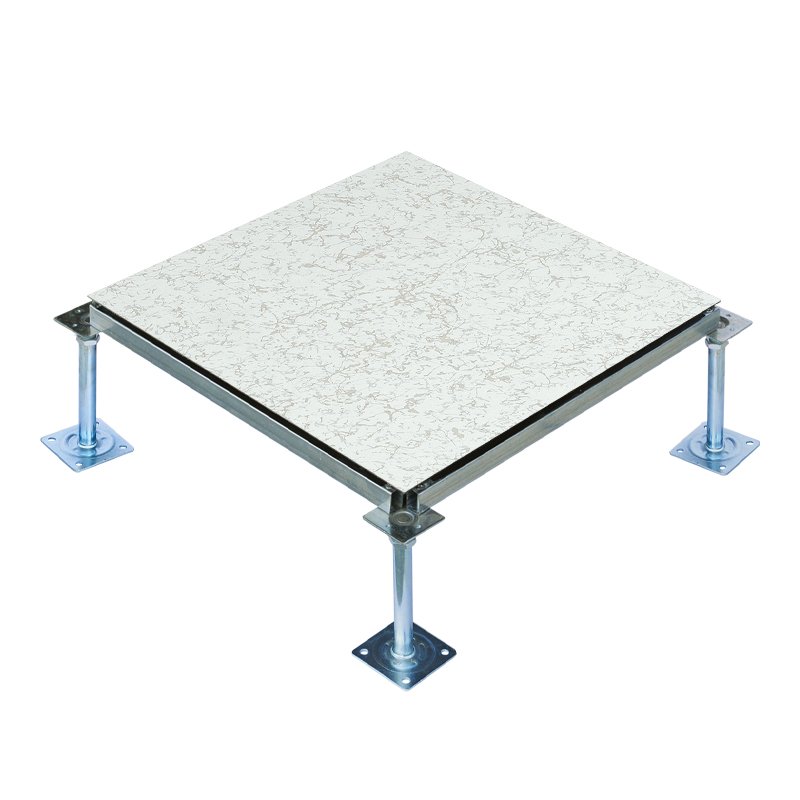
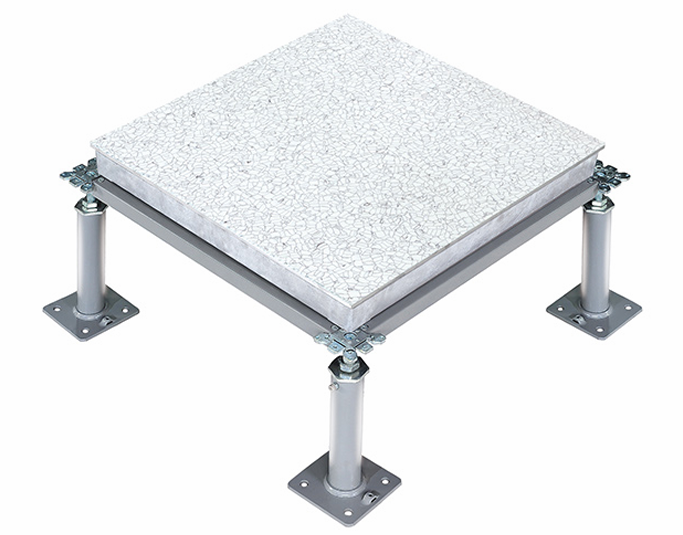
Calcium sulphate panels are crafted from high-density, re-crystallized calcium sulphate (gypsum) reinforced with non-toxic organic fibers. The mixture is compressed into solid, monolithic slabs before being encapsulated with galvanized steel sheets, aluminum foil, or high-pressure laminate (HPL) finishes. Known for superior acoustic damping, fire resistance, and impressive eco-friendly credentials, calcium sulphate is widely considered a premium flooring solution in modern architecture.
What is Cementitious Core Raised Flooring? Calcium Sulphate vs. Cementitious Core Raised Floors
Cementitious core panels consist of a light-gauge steel shell—a flat steel top sheet welded to a deep-drawn hemispherical steel bottom sheet—filled with a lightweight cementitious aggregate compound. This composite design leverages the tensile strength of steel alongside the compressive strength of concrete, creating a rigid panel that feels solid underfoot without adding excessive dead weight to the building’s overall structure.
Head-to-Head Performance Comparison: Calcium Sulphate vs. Cementitious Core Raised Floors
To select the right panel for your architectural requirements, evaluate how these materials perform across key operational metrics:
Deep Dive: Key Advantages of Each Flooring System : Calcium Sulphate vs. Cementitious Core Raised Floors
1. Acoustic Comfort and Ergonomics
In modern commercial spaces and busy corporate headquarters, control over ambient sound is essential for employee productivity and comfort.
-
Calcium Sulphate: Because of its dense, solid mass, calcium sulphate inherently dampens airborne and impact noise. Walking on a calcium sulphate raised floor feels identical to walking on a permanent concrete slab, minimizing footfall click-clack noise and reverberation between floors.
-
Cementitious Core: The concrete infill eliminates the hollow sound associated with older wood-core access panels. While quiet and sturdy, it carries slightly higher sound propagation compared to thick calcium sulphate.
2. Structural Load-Bearing Strength : Calcium Sulphate vs. Cementitious Core Raised Floors
Both systems are engineered to bear significant dynamic and static weights, such as heavy IT racks, UPS systems, and foot traffic.
-
Cementitious Core Panels: Excellent structural efficiency. The welded steel geometry locks the concrete core in place, providing superior resistance to impact loads and rolling equipment like heavy forklifts, machinery carts, and server racks.
-
Calcium Sulphate Panels: Offer exceptional concentrated load ratings. The monolithic structure resists localized sagging and point deflection under stationary heavy loads.
3. Fire Safety and Thermal Insulation : Calcium Sulphate vs. Cementitious Core Raised Floors
Protecting critical infrastructure against fire hazards is a paramount requirement in modern building codes.
-
Calcium Sulphate: Naturally contains chemically bound water within its gypsum structure. When exposed to heat, it undergoes an endothermic reaction, releasing water vapor to suppress temperature spikes. It routinely achieves the highest fire protection classes (Class A1/Class 0), providing extended evacuation and fire suppression windows.
-
Cementitious Panels: Feature non-combustible steel and cement construction, ensuring zero flame spread and minimal smoke contribution during thermal events.
4. Environmental Impact and Moisture Sensitivity : Calcium Sulphate vs. Cementitious Core Raised Floors
Sustainable building practices demand green material choices alongside long-term durability.
-
Calcium Sulphate: Leads in green building certifications (LEED points) due to its composition of non-toxic, recycled gypsum materials. However, because gypsum is naturally hygroscopic, panels must be properly sealed if installed in humid environments to prevent moisture absorption.
-
Cementitious Core: Encased within a protective steel casing, cementitious panels handle variable humidity levels exceptionally well, making them resilient during early-stage construction phases before indoor HVAC systems are fully operational.
Where Should You Install Which? : Calcium Sulphate vs. Cementitious Core Raised Floors
Choosing the right floor often comes down to the primary function of your facility:
                      FACILITY REQUIREMENTS
                                |
       +------------------------+------------------------+
       |                                                 |
       v                                                 v
[ High Acoustics & Green Building ]             [ Heavy Loads & Humidity Resilience ]
       |                                                 |
       v                                                 v
Specify Calcium Sulphate                         Specify Cementitious Core
(Corporate Offices, Executive Suites,            (Data Centers, Control Rooms,
 Banks, High-End Commercial Buildings)           Cleanrooms, Server Facilities)
-
Choose Calcium Sulphate Core Flooring If:
-
You are designing Class-A office spaces, corporate headquarters, financial institutions, or executive suites where noise reduction and premium underfoot comfort are top priorities.
-
Your project targets LEED or BREEAM green building certifications.
-
Superior fire isolation and extreme thermal resistance are non-negotiable requirements.
-
-
Choose Cementitious Core Flooring If:
-
You are building high-density data centers, telecom switch rooms, or industrial control facilities with heavy rolling equipment and stationary server racks.
-
The site experiences fluctuating humidity during installation phases.
-
You need a cost-effective, high-load-rated solution that balances durability with manageable structural deadweight.
-
The Verdict: Selecting the Best Core for Your Space : Calcium Sulphate vs. Cementitious Core Raised Floors
Neither flooring core is universally “better”—the right choice depends entirely on matching the physical properties of the material to your project’s unique demands.
If your vision prioritizes acoustic luxury, sustainable design, and high fire ratings, Calcium Sulphate Core Raised Floors deliver an unmatchable, solid-feel foundation. If your priority is impact resilience, high load-to-weight performance, and moisture durability, Cementitious Core Raised Floors remain the industry standard for high-tech industrial and mission-critical environments.
Ready to Upgrade Your Building Infrastructure? Calcium Sulphate vs. Cementitious Core Raised Floors
Explore our full range of engineered access flooring panels, pedestals, and custom surface finishes (HPL, Vinyl, Bare Steel, Carpet Tiles) designed to meet exact load and architectural specifications. Contact our engineering support team today for technical datasheets, structural load testing reports, and custom project quotes!
Frequently Asked Questions (FAQs)
Q: Are calcium sulphate raised floor panels waterproof? A: While they resist normal humidity levels when properly edge-banded and sealed, calcium sulphate cores are sensitive to prolonged exposure to standing water. For damp environments, cementitious core panels or specialized moisture-resistant finishes are recommended.
Q: Can I mix calcium sulphate and cementitious panels in the same building? A: Yes! Many multi-story developments specify high-density cementitious panels in ground-floor data centers and server rooms, while installing calcium sulphate panels across upper-level executive offices to maximize acoustic isolation.
Q: How do these cores affect building dead load? A: Calcium sulphate panels are denser and heavier than cementitious panels. When designing upper stories of high-rise structures, structural engineers must factor in the additional weight of calcium sulphate panels during frame calculations.
|
|
|
|