Anti-Static Raised Floor: Enhance the Safety and Efficiency of the Work Environment
Managing a modern data center, server room, or high-tech facility requires complete control over static electricity and cable chaos. An anti-static raised floor: enhance the safety and efficiency of the work environment by dissipating electrostatic discharge (ESD) before it damages sensitive hardware. Engineered with cementitious steel or high-density calcium sulphate cores, these modular elevated systems create a secure underfloor plenum. This subfloor void conceals power distribution, data cabling, and HVAC cooling ducts, keeping your workplace organized, compliant, and protected against sudden electrical surges. Anti-Static Raised Floor
Anti-Static Raised Floor: Enhance the Safety and Efficiency of the Work Environment
Protecting Sensitive Infrastructure from Electrostatic Hazards
Electrostatic discharge is an invisible, silent threat to high-performance technology environments. A simple walk across a standard commercial vinyl floor can generate thousands of volts of static charge. When released into delicate microchips, control circuits, or server racks, ESD can cause latent component failures, unexpected downtime, and permanent hardware damage. Anti-Static Raised Floor
Installing an anti-static raised floor: enhance the safety and efficiency of the work environment eliminates these operational risks entirely. These specialized flooring solutions utilize high-pressure laminate (HPL) or conductive PVC finishes paired with copper grounding networks. Static charges generated by foot traffic or equipment movement are safely conducted down through the pedestal system into the building’s grounding grid, ensuring zero static accumulation across your floor surface. Anti-Static Raised Floor
Optimizing Airflow and Thermal Management : Anti-Static Raised Floor
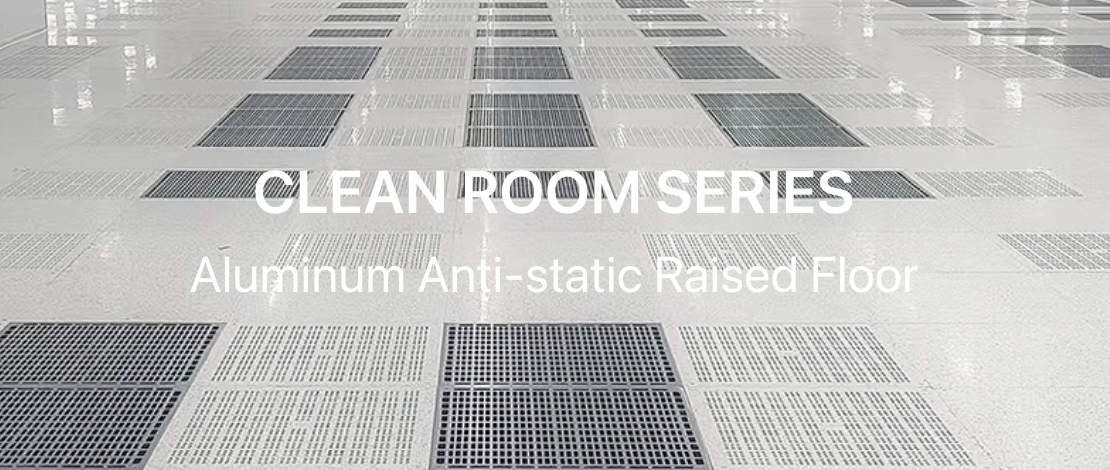
Heat management is one of the biggest challenges facing modern tech infrastructure. Packed server racks generate massive thermal loads that jeopardize uptime if not cooled efficiently. An anti-static raised access floor solves this by transforming the underfloor space into a pressurized cold-air plenum. Anti-Static Raised Floor
By placing perforated airflow panels directly in front of heat-producing equipment, cool air flows precisely where it is needed most. This targeted cooling approach prevents hot spots, reduces HVAC workload, and lowers overall facility energy consumption. Combined with brush grommets and sealing accessories, raised floors streamline air delivery while cutting utility costs. Anti-Static Raised Floor
Simplifying Cable Management and Workplace Dynamics : Anti-Static Raised Floor
Exposed cables present serious tripping hazards and make routine maintenance frustrating. Raised access flooring provides a structured grid beneath your workspace where power lines, fiber optic links, networking trunk lines, and piping can be organized neatly. Anti-Static Raised Floor
When your business expands or equipment needs repositioning, you simply lift the modular panels with a suction panel lifter, adjust the wiring underneath, and drop the tiles back into place. There is no need for costly structural alterations, invasive trenching, or lengthy facility shutdowns. Anti-Static Raised Floor
       [ HPL / Conductive PVC Tile Finish ]
                         │
     [ Lightweight Cementitious Steel Core ]
                         │
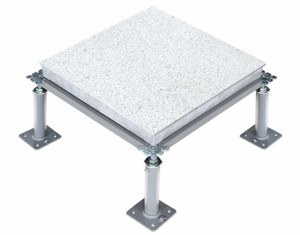
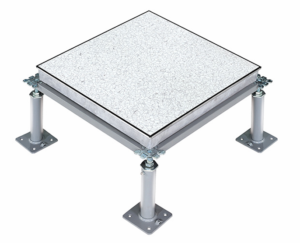
  [ Adjustable Steel Pedestals & Stringers ]
                         │
         ====[ Grounding Mesh Layer ]====
                         │
      [ Grounding Terminal (To Earth) ]
Unmatched Load Capacity and Structural Longevity
Commercial data infrastructure is heavy. High-density server cabinets, uninterruptible power supplies (UPS), and heavy lab gear demand exceptional structural integrity. Premium anti-static raised floor panels are built from cold-rolled steel filled with lightweight cementitious material or high-density calcium sulphate.
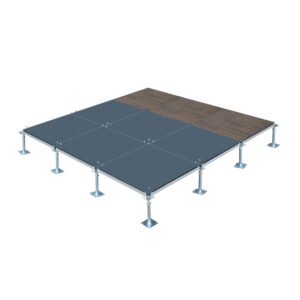
Supported by heavy-duty steel pedestals and interlocking stringer frames, these systems effortlessly support concentrated, ultimate, and rolling loads. Galvanized coatings ensure corrosion resistance, giving your floor a service life that matches or exceeds the building itself. Anti-Static Raised Floor
Anti-Static Raised Floor Specifications : Anti-Static Raised Floor
| Feature / Attribute | Technical Specification Detail |
| System Name | Anti-static Raised Floor System |
| Primary Core Material | Lightweight Cementitious Steel Panel / High-Density Calcium Sulphate |
| Surface Finish Options | Anti-Static High-Pressure Laminate (HPL) / ESD Conductive Vinyl (PVC) |
| Panel Dimensions | 600 mm x 600 mm / 610 mm x 610 mm |
| Panel Thickness | 30 mm – 40 mm (Customizable based on load grade) |
| System Finished Floor Height (FFH) | 100 mm to 1500 mm (Fully adjustable pedestals) |
| System Electrostatic Resistance | $1.0 \times 10^5 \ \Omega$ to $1.0 \times 10^9 \ \Omega$ (Conductive to Static Dissipative) |
| Concentrated Load Capacity | 2,000 N to 6,000 N (200 kg to 600 kg per panel) |
| Uniform Load Capacity | 12,500 N/m² to 25,000 N/m² |
| Ultimate Load Capacity | Exceeds 3x concentrated design load |
| Fire Safety Rating | Class A Flame Spread / Non-combustible core (BS 476 Part 6 & 7) |
| Pedestal Structure | Heavy-duty galvanized steel head, threaded rod, and base plate |
| Understructure Lock System | Screw-down stringer grid with acoustic gasket padding |
| Corrosion Protection | Electro-galvanized / Epoxy powder-coated steel bottom plate |
| Acoustic Insulation | High impact-sound damping (STC $\ge$ 45 dB) |
Why Choose “Anti-static raised floor: enhance the safety and efficiency of the work environment”
-
Complete ESD Protection: Safely channels electrostatic charges directly to the ground, protecting expensive servers, telecommunication systems, and medical devices. Anti-Static Raised Floor
-
Smart Thermal Control: Functions as an underfloor air distribution ducting system, delivering targeted cold air precisely to high-density racks.
-
Effortless Maintenance Access: Individual modular tiles lift easily using suction lifters, allowing technicians instant access to cabling without disrupting workflow. Anti-Static Raised Floor
-
Heavy-Duty Load Performance: Engineered to withstand static equipment weight and dynamic rolling loads from server carts and hand trucks. Anti-Static Raised Floor
-
Flexible Future-Proofing: Easily reconfigure room layouts, add network drops, or move server racks as your operations expand. Anti-Static Raised Floor
Anti-Static Raised Floor: Pros and Cons
| Advantages (Pros) | Disadvantages (Cons) |
| Maximum Equipment Safety: Prevents costly ESD damage and unpredicted system lockups. | Initial Investment: Higher upfront material and installation cost compared to standard commercial tiles. |
| Streamlined Cable Management: Keeps floor spaces clutter-free, reducing trip hazards and enhancing aesthetics. | Ceiling Height Reduction: Requires vertical room clearance (usually 150 mm–600 mm) for subfloor space. |
| Superior Energy Efficiency: Reduces facility cooling costs through targeted plenum airflow management. | Professional Installation Required: Needs precise floor leveling and grounding by certified technicians. |
| High Fire & Sound Resistance: Incombustible materials provide acoustic dampening and fire protection. | Ramp Access Needed: Requires access ramps or step transitions at room entrances. |
Frequently Asked Questions
How does an anti-static raised floor dissipate static charge?
The top tile surface (HPL or Conductive PVC) carries a specific electrical resistance. Static electricity from personnel or equipment moves through the panel core, passes into the conductive pedestal grid, and exits harmlessly via a dedicated grounding cable attached to the building earth.
What is the recommended floor height for server rooms?
While heights start at 100 mm, server rooms and data centers typically install elevated floors at 300 mm to 600 mm. This height ensures ample clearance for high-density cable trays, pipe runs, and unrestricted cold air plenum distribution.
Can an anti-static raised floor support heavy server racks?
Yes. Quality cementitious steel and calcium sulphate panels are tested for heavy concentrated and dynamic loads. Racks can be placed directly on the floor panels, while extreme point loads can be reinforced using additional pedestal supports under specific grid locations.
How do you clean and maintain anti-static floor panels?
Clean the floor using a damp mop with neutral, non-abrasive anti-static cleaners. Avoid wax, solvent cleaners, or excess water, as these can coat the surface, ruin its conductive properties, or seep into panel joints.
How often should underfloor cable inspections be performed?
Because panels lift easily with a standard double suction-cup panel lifter, routine quarterly or semi-annual visual inspections of subfloor wiring, air dams, and grounding connections are simple to conduct.
|
|
|
|