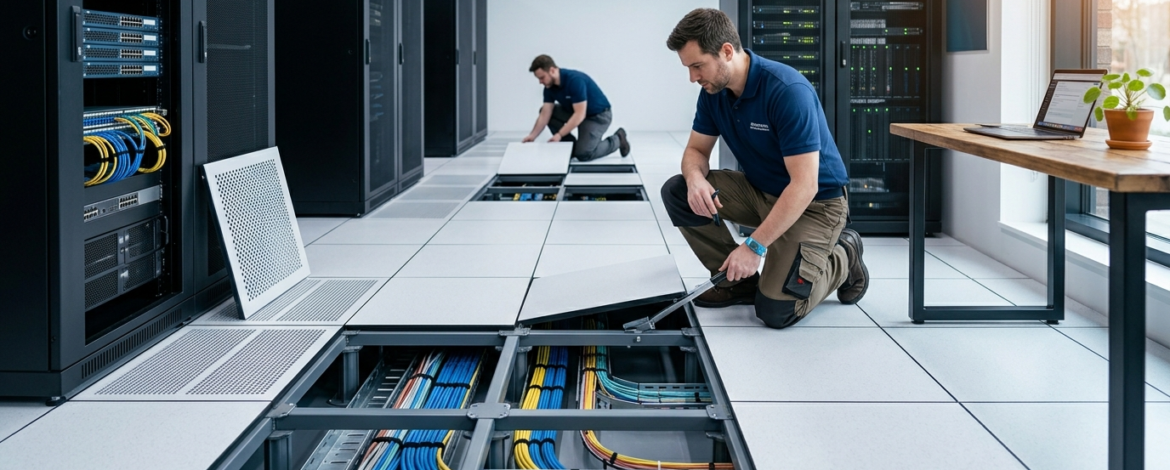
Raised Floor Price in Bangladesh: Ultimate Cost Guide for 2026
Are you designing a next-generation data center in Dhaka, upgrading a busy IT server room, or building a modern, wire-free corporate headquarters? Managing messy cables, complex airflow systems, and heavy equipment loads always starts from the ground up.
Choosing the right flooring asset shouldn’t be an expensive guessing game. This comprehensive pricing playbook cuts through market noise to deliver clear, upfront cost data, technical specifications, and expert insights tailored specifically for the Bangladeshi market. Explore our live breakdown below to map your project budget with 100% financial precision.
A Professional Deep-Dive into Raised Floor Price in Bangladesh: Ultimate Cost Guide for 2026
Modern commercial infrastructure moves fast, and hidden wiring arrays can stall your operational workflow if your floor isn’t built to adapt. When implementing an elevated access floor infrastructure, managing upfront expenditure while hitting strict load capacities is a balancing act. The Raised Floor Price in Bangladesh: Ultimate Cost Guide for 2026 provides an authoritative, reality-tested financial framework designed for commercial contractors, data center administrators, and structural architects across Bangladesh.
Elevated floors do much more than simply hide a maze of fiber-optic cables and electrical conduits. They function as active thermal regulators and defensive barriers against static discharge. In Dhaka’s humid climate, static and poor airflow can permanently damage sensitive server blades.
The cost of a raised access flooring network in Bangladesh varies considerably based on core materials, protective coatings, structural finishes, and maximum load ratings. Generally, localized market rates fall between BDT 320 to BDT 750 per square foot for standard configurations. However, specialized heavy-duty industrial designs or premium European imports naturally fetch a higher market investment.
[Estimated Baseline Market Tiers in Bangladesh for 2026]
┌─────────────────────────────────────────────────────────────┐
│ 🟩 Economy Tier (Steel/Composite, Understructure)            │
│ 💰 BDT 320 - BDT 420 / sq. ft.                              │
├─────────────────────────────────────────────────────────────┤
│ 🟦 Professional Data Center Tier (Anti-Static, Cement Core) │
│ 💰 BDT 450 - BDT 600 / sq. ft.                              │
├─────────────────────────────────────────────────────────────┤
│ 🟪 Premium Heavy-Duty Tier (Calcium Sulphate / Aluminum)    │
│ 💰 BDT 650 - BDT 750+ / sq. ft.                             │
└─────────────────────────────────────────────────────────────┘
Understanding what drives these pricing tiers ensures you don’t overpay for raw specs you don’t need, or worse, under-budget and compromise safety.
Breaking Down the Primary Cost Pillars
-
The Internal Structural Core: The material inside your panels dictates both the baseline price and structural durability. Lightweight wood-core options offer an economical entry point for standard corporate layout spaces. Meanwhile, high-density foamed cement cores (such as the industry-standard FS800 and FS1000 systems) provide the robust, non-combustible strength required by heavy server racks.
-
Surface Finishes and Lamination: For basic office infrastructure, bare panels ready for carpet tiles keep costs low. In high-stakes technological environments, you need specialized coatings like High-Pressure Laminate (HPL) or Conductive PVC. These surface materials actively dissipate static charges away from human operators and hardware, altering the baseline material cost.
-
Finished Floor Height (FFH) and Understructure Support: The price of a system isn’t limited to the flat tile alone. It relies heavily on the understructure, composed of adjustable steel pedestals, locking gaskets, and structural channel stringers. Higher elevation targets require thicker, reinforced steel pedestals to handle the load safely, increasing the overall cost per square meter.
Technical Specifications Matrix
This breakdown outlines the structural metrics, composition baselines, and cost variables for access flooring frameworks across Bangladesh for 2026.
| Material / System Component | Standard Grid Dimension | Core Composition Density | Static Load Capacity | Ultimate Safety Load Limit | Surface Resistivity Range | Finished Floor Height Range | Fire Rating Classification | Air Preforated Option | Estimated BDT Price Range (per Sq. Ft.) |
| OA Steel Bare Panel | 600 × 600 mm | Lightweight Composite | 2,950 N | ≥ 9,000 N | Non-coated baseline | 100 mm to 300 mm | Class A (Non-combustible) | Not Available | BDT 320 – BDT 380 |
| Light Cement Core FS800 | 600 × 600 mm | Foamed Light Cement | 3,600 N | ≥ 10,800 N | $1 \times 10^6 – 1 \times 10^9\ \Omega$ | 150 mm to 450 mm | Class A (1-Hour rated) | 22% Mesh Optional | BDT 420 – BDT 490 |
| Heavy Cement Core FS1000 | 600 × 600 mm | High-Density Cement | 4,450 N | ≥ 13,350 N | $1 \times 10^6 – 1 \times 10^9\ \Omega$ | 200 mm to 600 mm | Class A (2-Hour rated) | 45% Perforation | BDT 480 – BDT 560 |
| Ultra Load Core FS1250 | 600 × 600 mm | Reinforced Solid Slag | 5,560 N | ≥ 16,680 N | $1 \times 10^6 – 1 \times 10^10\ \Omega$ | 300 mm to 1200 mm | Class A (3-Hour rated) | Sliding Damper Type | BDT 580 – BDT 680 |
| Wood-Core Structural | 600 × 600 mm | High-Density Particle | 2,200 N | ≥ 6,600 N | Anti-static Carpet | 100 mm to 400 mm | Class B1 (Flame Retardant) | Not Available | BDT 340 – BDT 410 |
| Calcium Sulphate Base | 600 × 600 mm | Pure Mineral Silicate | 4,000 N | ≥ 12,000 N | Insulative Baseline | 150 mm to 800 mm | Class A1 (Highest Rating) | 25% Slot Option | BDT 620 – BDT 720 |
| Solid Aluminum Die-Cast | 600 × 600 mm | Aircraft Grade Alloy | 5,000 N | ≥ 15,000 N | Completely Grounded | 200 mm to 1000 mm | Completely Immune | 55% Grate Panel | BDT 750 – BDT 950 |
| HPL Anti-Static Panel | 600 × 600 mm | Cement Core + HPL | 3,550 N | ≥ 10,650 N | $2.5 \times 10^4 – 1 \times 10^6\ \Omega$ | 150 mm to 500 mm | Class A (Flame Safe) | 32% Flow Control | BDT 460 – BDT 540 |
| PVC Conductive Panel | 600 × 600 mm | Cement Core + PVC | 3,550 N | ≥ 10,650 N | $5 \times 10^4 – 1 \times 10^8\ \Omega$ | 150 mm to 500 mm | Class A Standard | 32% Flow Control | BDT 440 – BDT 520 |
| Heavy Pedestal Substructure | M16 Thread | Carbon Structural Steel | Up to 45 kN | Axial Crush Proof | Electro-galvanized | 300 mm Base Unit | Non-Combustible | N/A (Component Support) | Included in Unit Kit |
| Standard Stringer Channel | 540 mm L | Cold-Rolled Zinc Sheet | Flexure Resistant | Shear Deflection Safe | Conductive Connection | 30 mm Height Profiling | Non-Combustible | N/A (Component Support) | Included in Unit Kit |
| Perforated Air Flow Tile | 600 × 600 mm | Ventilated Steel Grate | 3,300 N | ≥ 9,900 N | Surface Coated Anti-Static | 200 mm to 600 mm | Class A Compliant | 20% to 70% Flow Rate | BDT 650 – BDT 850 |
| Glass Access Indicator | 600 × 600 mm | Multi-Layer Temp Glass | 2,500 N | Structural Safe Border | Insulative Finish | 200 mm to 400 mm | Fire Retardant Edge | Transparent Display | BDT 1,200 – BDT 1,800 |
| Deep Trunking Access Box | 300 × 300 mm | Galvanized Steel Enclosure | Heavy Foot Traffic Safe | Impact Shield Protected | Non-Interfering Shielding | Flush Mounted System | Flame Sealing Body | Cable Exit Cutouts | BDT 3,500 – BDT 5,500 |
| Suction Tile Lifter Tool | Dual Cup | ABS Body + Rubber Base | N/A | 70 kg Vertical Pull Max | Non-Marring Surface | Hand-operated Access | Fire Neutral Material | N/A (Tool Accessory) | BDT 2,500 – BDT 4,000 |
Why Choose Our 2026 Elevated Access Flooring Solutions?
Investing in an elevated floor grid means protecting your core hardware infrastructure. Our platforms balance long-term asset security with everyday workplace practicality.
-
Tailored Micro-Climate Adaptability: Designed to perform in Bangladesh’s challenging humidity profiles. Our anti-static laminates prevent moisture-driven surface tracking and catastrophic electrostatic discharge (ESD) failures.
-
Simplified Maintenance Workflows: No more tearing out walls or cutting open concrete subfloors to run new lines. Every panel can be lifted in seconds using a dual-cup suction lifter, keeping your system upgrades smooth and stress-free.
-
Structural Safety & Certified Integrity: Our inventory options meet rigorous European EN 12825 and global CISCA test configurations. This guarantees true, certified performance benchmarks across safety, impact deflection, and fire suppression.
Pros and Cons Matrix
Evaluating performance trade-offs helps you choose the right flooring design for your space.
| Product Advantages (Pros) | Project Limitations (Cons) |
| Ultimate Routing Flexibility: Creates accessible pathways for power grids, data conduits, and complex HVAC ducts. | Initial Investment Overhead: Requires a higher upfront budget allocation than basic concrete screeds or porcelain tiles. |
| Rapid Expansion Potential: Modular designs let you add or rearrange server racks without cutting into your floor. | Precision Installation Needs: Requires a perfectly flat understructure; uneven setups can lead to panel rattling. |
| Superior Thermal Management: Underfloor air plenums direct cold air precisely to hotspots, cutting energy bills. | Routine Inspection Maintenance: Subfloors must be cleaned every few years to prevent dust buildup in data centers. |
| Durable Structural Lifecycle: Rugged cement-filled steel sheets resist heavy impacts and handle heavy foot traffic for decades. | Headroom Space Constraints: High raised setups lower the total vertical clearance in low-ceiling rooms. |
Frequently Asked Questions
What is the baseline cost of a raised access flooring system in Dhaka?
Standard installations using high-pressure laminate (HPL) panels with foamed cement cores run between BDT 420 and BDT 560 per square foot. This estimated figure covers the tile panels, pedestals, stringers, and primary installation accessories. Final quotes depend on your specific height layout, floor load needs, and delivery logistics.
Can these systems be installed over an existing tiled floor?
Yes. Adjustable pedestals can be anchored directly onto raw concrete subfloors, ceramic tiles, or older epoxy coatings. The base surface must be structurally sound, dry, and free of loose debris before setting up the steel supports.
Which core material is best for an IT server room?
An electro-galvanized steel panel filled with a foamed cement core (like an FS800 or FS1000 rating) combined with an HPL finish is the gold standard. This layout offers the ideal balance of heavy weight distribution, a fire-resistant barrier, and static control.
How does an underfloor plenum cut cooling costs in data centers?
Instead of pushing cold air down from high ceilings, a raised floor works as a sealed cooling pressure chamber. By placing perforated tiles directly in front of server intake zones, cold air flows exactly where it’s needed, stopping energy waste from air mixing.
What maintenance do access floors require?
The main tasks are simple suction-lifting for cable access and regular surface wipes using specialized cleaners that protect anti-static coatings. Vacuuming the subfloor plenum every few years keeps your servers running dust-free.